
Sensory overload can feel sudden, but it usually builds in layers. Noise stacks on top of light. A tight schedule adds pressure. Notifications keep arriving. Then the body reacts before we can explain what is happening. Our chest gets tight. Our jaw hardens. We lose patience. We want less input, fast.
In our experience, conscious breathing can help because it gives the body a clear signal of safety. It does not erase the outside world. It changes how we meet it. Conscious breathing is the act of paying attention to the breath and shaping its rhythm on purpose.
That may sound simple. It is simple. But simple does not mean small. A few steady breaths can interrupt the rush that turns discomfort into overload.
What sensory overload feels like in the body
Sensory overload is not only mental. We feel it through the whole system. Sometimes we notice it in a crowded room. Other times it happens at home, after a long day, when one more sound feels like too much.
We often see a mix of signs such as:
- Fast breathing or breath holding
- Racing heart
- Tension in the shoulders, face, or hands
- Trouble focusing on one thing
- Irritability, panic, or the urge to leave
- Heightened sensitivity to sound, light, touch, or smell
When this happens, the body is not failing. It is reacting. It is trying to protect us by preparing for action. The trouble is that this response can make the senses feel even sharper. We hear more. We brace more. We tire faster.
Breath changes the body first.
Why breathing can calm overload
Breathing sits in a unique place between automatic and voluntary action. We do not need to think to breathe, yet we can guide it when needed. That makes it one of the fastest ways to influence our physical state.
When we slow the breath, especially the exhale, the nervous system often begins to shift. Heart rate may soften. Muscle tension may ease. Attention can move from scattered to grounded. Slow breathing helps because it lowers the sense of urgency inside the body.
Research supports this. In a trial in adults after stroke using slow-paced breathing, 15 minutes at about 6 breaths per minute improved baroreflex sensitivity, lowered heart rate, and reduced systolic blood pressure compared with faster control breathing. We find that this matters for overload because a calmer cardiovascular state often gives us more room to process stimulation without tipping into distress.
Another meta-analysis on slow-paced breathing across 31 studies found immediate benefits such as lower systolic blood pressure, higher heart rate variability, and a modest drop in heart rate. Even when feelings do not shift at once, the body may already be moving toward regulation. That is often where relief begins.
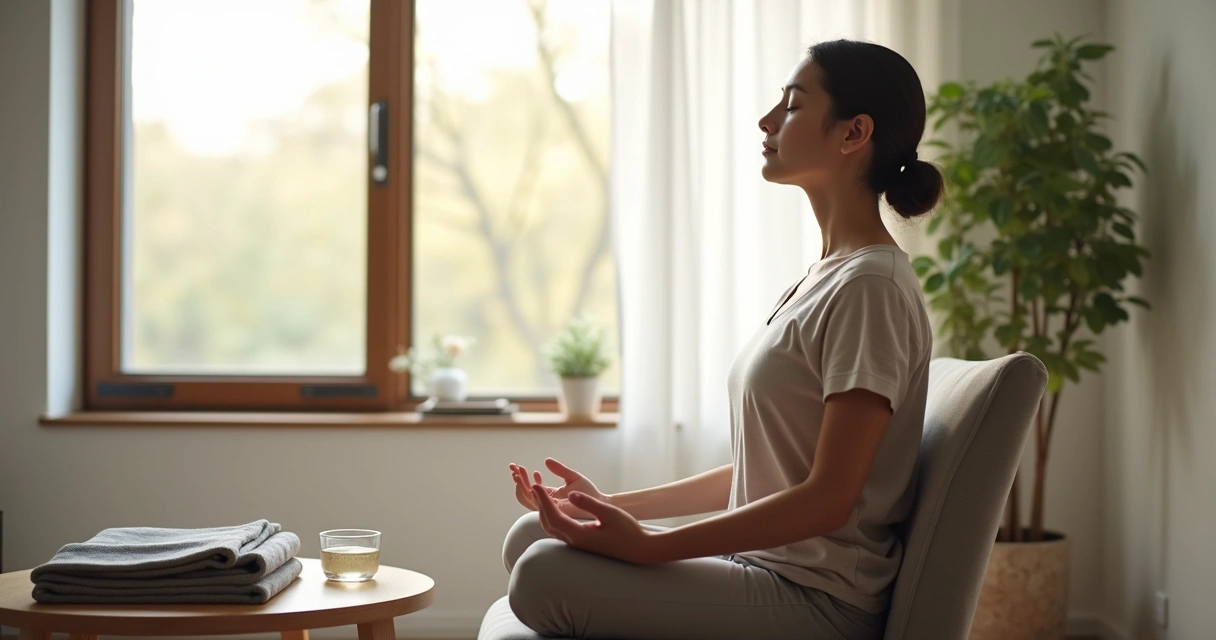
How to use conscious breathing in the moment
When overload is already happening, complex instructions can feel annoying. We think the best method is the one we can still do under stress. Start with less effort, not more.
A short sequence can help:
- Pause what can be paused. If possible, reduce one source of input.
- Place attention on the exhale first, not the inhale.
- Breathe in through the nose gently for 4.
- Breathe out slowly for 6.
- Repeat for 5 to 10 rounds without forcing depth.
This works well because the longer exhale often softens urgency. If counting feels stressful, we can switch to words such as “in” and “out,” or simply notice cool air entering and warmer air leaving.
One afternoon, many of us have had this kind of moment: a phone rings, traffic hums outside, someone asks a question, and suddenly the body says no. In that instant, a perfect breathing practice is not needed. One slower exhale is enough to begin.
The goal is not deep breathing. The goal is steady breathing that feels safe.
Breathing methods that work well
Different situations call for different patterns. We usually suggest choosing one and practicing it before stressful moments, so it feels familiar later.
These methods are often helpful:
- Extended exhale breathing: Inhale for 4, exhale for 6 or 8. Good for acute tension.
- Box breathing: Inhale 4, hold 4, exhale 4, hold 4. Good when the mind feels scattered.
- Resonant breathing: About 5 to 6 breaths per minute. Good for settling the whole system.
- Hand-on-chest breathing: One hand on the chest, one on the belly, slow and natural. Good when reassurance is needed.
We should add one caution. If breath holds create more tension, skip them. If long inhales feel uncomfortable, make them shorter. The body responds better to cooperation than force.
Making the environment work with the breath
Breathing helps more when we pair it with small changes around us. We do not need a perfect room. We only need to reduce friction.
That can mean:
- Lowering volume or stepping away from noise
- Softening bright light
- Looking at one stable object instead of many moving ones
- Relaxing the jaw and dropping the shoulders
- Using a predictable rhythm, like feet on the floor with each exhale
These actions matter because overload is often cumulative. If the senses are getting hit from many directions, breath does better when the outside demand also comes down a little.
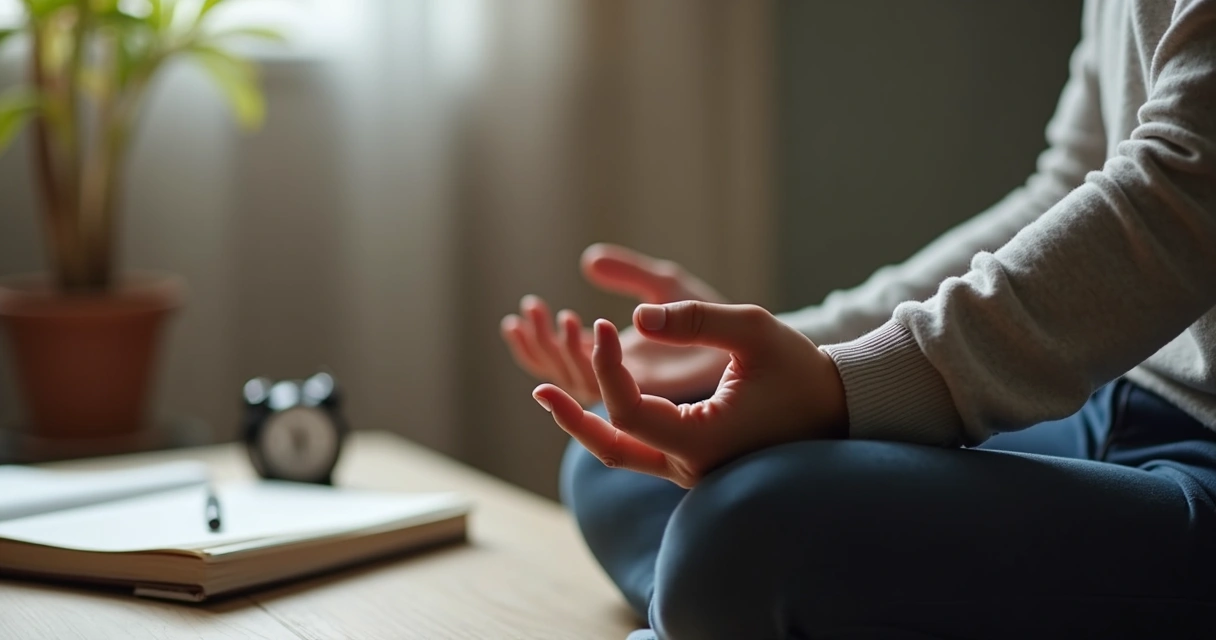
Building a daily habit before overload starts
Breathing is easier to trust when we know it before we need it. We think short daily practice works better than waiting for hard days. Two or three minutes is enough to build familiarity.
A simple plan could look like this:
- Pick one time each day, such as after waking or before sleep.
- Practice one breathing pattern only.
- Keep the posture easy and the face soft.
- Stop before strain appears.
Over time, the body starts to recognize the pattern faster. That is often the quiet benefit. We do not always notice it during practice. We notice it later, when a noisy place feels a little more manageable than before.
When breathing is not enough on its own
Conscious breathing is a strong support, but it is not the answer to every case. If overload is frequent, severe, or linked with panic, trauma, burnout, or a health condition, wider support may be needed. Breathing can still help, yet it may work best as one part of a broader care plan.
It is also wise to go gently if slow breathing makes us dizzy. In that case, shorten the practice, return to a natural rhythm, and avoid forcing large breaths.
Conclusion
Conscious breathing gives us a direct way to respond when sensory input becomes too much. It does not control the world around us, but it can steady the body within it. With a softer exhale, a slower pace, and a little repetition, we often gain a clearer mind and a wider gap between sensation and reaction.
That gap matters. It is where choice returns. It is where we can feel, notice, and respond with more balance.
Frequently asked questions
What is conscious breathing for overload?
Conscious breathing for overload is a deliberate way of slowing and noticing the breath to calm the body during intense sensory input. It helps create a steadier internal state when sound, light, touch, or stress feels too strong.
How does breathing help sensory overload?
Breathing helps by slowing physical arousal. A calmer breath can reduce tension, soften heart rate, and lower the feeling of urgency. When the body feels less threatened, the senses may become easier to manage.
What are the best breathing techniques?
Good options include extended exhale breathing, box breathing, resonant breathing at about 5 to 6 breaths per minute, and simple hand-on-chest breathing. The best one is the one that feels easy and safe for us to repeat.
Can kids use conscious breathing too?
Yes, many kids can use conscious breathing with short, simple guidance. Counting to three on the inhale and four on the exhale, or breathing with a hand on the belly, often works well. Keep it brief, calm, and age-appropriate.
How often should I practice breathing?
Daily practice tends to work best, even if it lasts only two to five minutes. Regular repetition helps the body recognize the pattern more quickly when overload begins.