
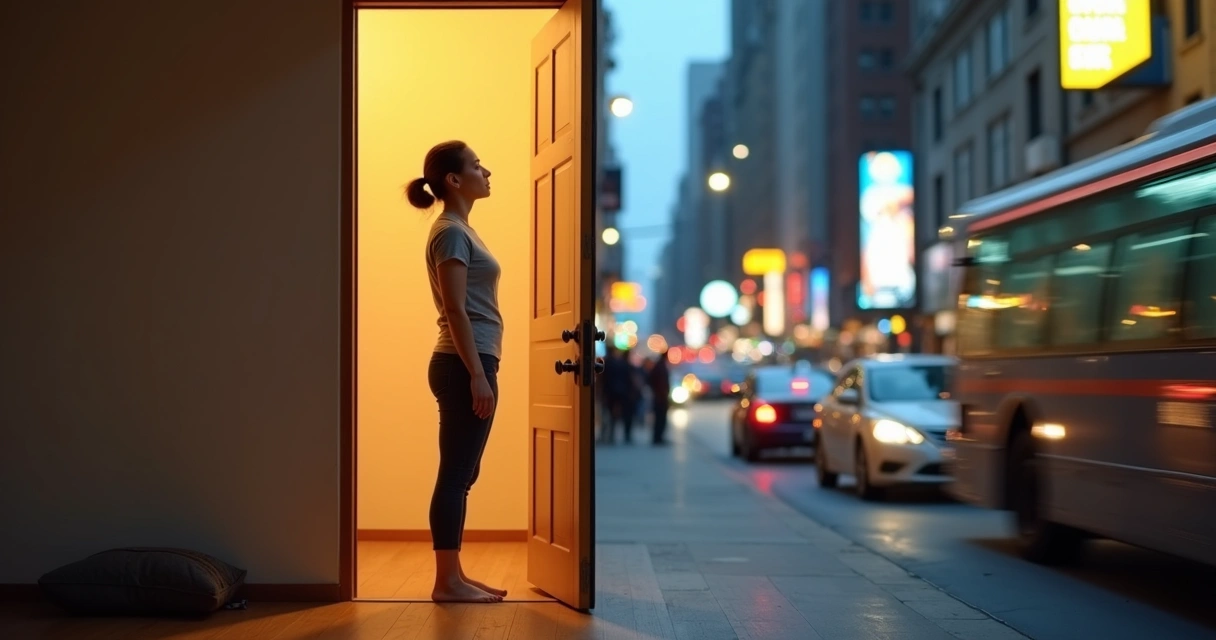
We notice our breath in different ways depending on where we are. In a quiet room, the breath often feels close, clear, and easy to follow. In a noisy space, the same breath may seem far away, uneven, or hard to sense. This contrast is not small. It changes how we feel our body, how we settle our attention, and how we respond to stress.
Breath awareness is shaped not only by the body, but also by the environment around us.
Many of us have had this simple experience. We sit in silence and hear the soft sound of air moving through the nose. The chest rises. The belly softens. A few minutes later, after stepping into traffic, conversation, or loud music, that inner signal fades. We are still breathing, of course. Yet awareness becomes thinner.
This does not mean silence is always good and noise is always bad. We think the real question is subtler. What kind of space supports attention? What kind of space trains resilience? And when does sound sharpen awareness instead of breaking it?
What silence makes possible
Silent rooms reduce competition for attention. When fewer sounds ask for a response, we can sense the body with less effort. Small shifts become easier to notice, such as a pause after the exhale, tightness in the throat, or the speed of breathing after an emotional thought.
In our experience, silence often helps in three ways:
- It lowers sensory demand, so attention can rest on internal signals.
- It makes subtle breathing patterns easier to detect.
- It supports emotional settling when the nervous system is already tired.
This is why beginners often do well in calm settings. They are not yet trying to master a breathing method. They are learning to notice what is already there. Quiet helps them hear the body before they try to change it.
Silence reveals what noise can hide.
There is also a psychological side to silent rooms. A quiet place can create a sense of permission. We feel less watched. Less rushed. Less pulled toward the next task. This matters because breath awareness is sensitive to inner pressure. If we feel that we must perform calmness, the breath usually grows less natural.
How noise changes the picture
Noisy spaces do not only add sound. They add interruption. The mind starts sorting. Which sound matters? Which one is a threat? Which one should we ignore? Even when we think we are used to noise, the body may stay in a low state of alert.
Noise often pulls attention outward, while breath awareness asks attention to turn inward.
This tension can show up in daily life in simple forms:
- Breathing becomes shallow in crowded places.
- The exhale shortens when sound feels harsh or unpredictable.
- We lose track of breathing when speech, screens, and movement happen at once.
We have seen this in ordinary moments. Someone tries to pause and feel one full inhale at a train station. A loud announcement interrupts. Then a phone vibrates. Then a person brushes past. The breath is still present, but awareness keeps being reset.
Noise can also affect mood before we even notice it. A space filled with constant talking, engines, or mechanical hum may lead to irritation or mental fatigue. When that happens, breathing may become more reactive. We stop sensing breath as a living rhythm and start using it only for survival.

Can noise ever help?
Yes, in some cases. Once basic breath awareness is stable, practicing in mild noise can build steadiness. We do not always live in quiet rooms. We live in homes, streets, offices, and public spaces. If awareness only works in perfect silence, it remains fragile.
This is where training can mature. We may begin in silence, then slowly include more sound. Not to fight the environment, but to stay present inside it.
A useful progression may look like this:
- Start in a quiet room and notice the natural breath.
- Practice with soft background sound, such as distant rain or a fan.
- Move to a space with mild human activity and keep attention on one full inhale and one full exhale.
- Practice brief check-ins in busier settings without expecting deep calm.
This approach prevents frustration. A crowded café is not the same as a silent room, so we should not demand the same result. In noise, success may simply mean noticing tension early and softening one exhale.
A noisy space can become a place of practice when we adjust the goal from control to awareness.
Breath awareness and emotional tone
Environment affects more than focus. It also shapes feeling. Silence can bring comfort, but it can also feel intense for some people. In a very quiet room, buried thoughts may rise. A person may hear the breath clearly and suddenly notice worry, grief, or restlessness.
That does not mean the practice is failing. It may mean the person is finally hearing what constant sound had covered.
On the other hand, noise can protect us from inner contact. We stay busy, stimulated, and outwardly engaged. For a while, that can feel easier. Yet when every space is filled with sound, we may lose the habit of sensing our own state.
We think healthy practice includes both honesty and range. Silence helps us meet ourselves. Moderate noise helps us remain with ourselves.
How to choose the right setting
The best place for breath awareness depends on the moment. If we are exhausted, irritated, or emotionally flooded, silence usually helps first. If we already feel grounded, a less controlled space may strengthen continuity.
We can choose the setting by asking a few direct questions:
- Is my mind scattered or already steady?
- Do I need recovery, or do I need practice in real-life conditions?
- Is the sound soft and stable, or sharp and unpredictable?
These questions keep the practice honest. They stop us from forcing ourselves into the wrong environment just because it seems harder or more advanced.

Conclusion
Silent rooms and noisy spaces shape breath awareness in different ways. Silence makes the breath easier to detect, especially when we are learning or recovering balance. Noise tests our ability to stay present when life is active and attention is divided.
We do not need to choose one forever. We can use each space with clarity. Quiet settings help us sense the breath with depth. Busier settings help us carry that awareness into ordinary life. When we understand this difference, practice becomes more realistic, patient, and human.
Sometimes we need stillness. Sometimes we need steadiness. The breath can teach both.
Frequently asked questions
What is breath awareness?
Breath awareness is the practice of noticing the breath as it happens. We pay attention to inhale, exhale, rhythm, depth, and body sensation without forcing change at first. This can help us sense our physical and emotional state more clearly.
How does noise affect breath awareness?
Noise can pull attention outward and make internal signals harder to notice. In loud or unpredictable spaces, we may breathe faster, shorter, or more shallowly. It can also increase tension, which changes how the breath feels in the chest, throat, and belly.
Is a silent room better for breathing?
A silent room is often better for noticing the breath, especially for beginners or during stress. It reduces distraction and makes subtle patterns easier to feel. Still, breathing itself is not better only in silence. We can also learn to stay aware in other settings.
Can I practice breath awareness anywhere?
Yes, we can practice almost anywhere, but the form of practice may change. In a quiet room, we may stay longer and notice more detail. In busy places, shorter moments of awareness often work better, such as feeling one slow exhale while standing or walking.
What are the benefits of silent rooms?
Silent rooms can support calm attention, clearer body awareness, and easier contact with subtle breathing patterns. They may also help reduce sensory overload and give the mind space to settle. For many people, this makes inner observation feel more natural and less strained.